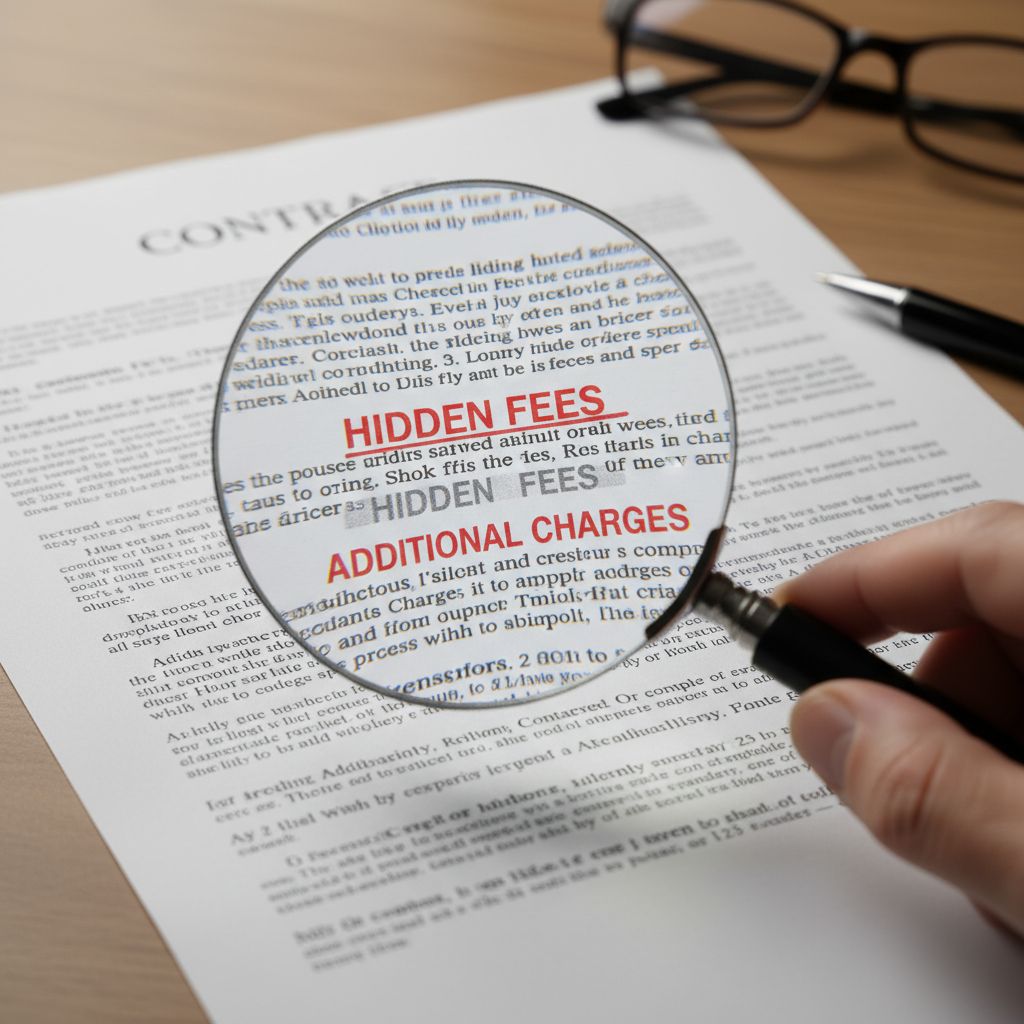
When shopping for truck financing, it's natural to focus on the interest rate and monthly payment. However, these headline numbers don't always tell the complete story. Hidden fees buried in the fine print can add thousands of dollars to your total financing cost, effectively negating what seemed like a competitive rate.
Understanding what fees to look for, which are negotiable, and which are red flags empowers you to compare financing offers accurately and avoid costly surprises. This guide exposes the most common hidden fees in truck financing and shows you how to protect yourself.
Get Transparent Financing Quotes
Compare offers from lenders who provide clear, upfront pricing. Know exactly what you'll pay before you commit.
Get Your Free QuoteCommon Fees in Truck Financing
Some fees are standard in the industry while others are pure profit centers for lenders. Understanding the difference helps you know which to accept and which to challenge.
Origination Fees
Origination fees compensate the lender for processing your loan application. They're typically expressed as a percentage of the loan amount, ranging from 0.5% to 3% or more.
On a $100,000 truck loan, a 2% origination fee adds $2,000 to your costs. This fee may be added to your loan balance (meaning you pay interest on it) or required at closing.
What to know: Origination fees are often negotiable, especially if you have good credit or multiple competing offers. Some lenders waive them entirely or offer lower rates with higher fees (or vice versa). Always calculate the total cost including fees when comparing options.
Documentation Fees
Documentation or "doc" fees cover the cost of preparing loan paperwork. While some documentation cost is legitimate, excessive doc fees are often pure profit. These fees typically range from $100 to $1,000 or more.
What to know: Documentation fees are highly negotiable. If a lender quotes a high doc fee, push back. Many will reduce or waive this fee rather than lose your business.
Application Fees
Some lenders charge fees just to apply for financing, regardless of whether you're approved. These fees range from $50 to several hundred dollars.
What to know: Many reputable lenders don't charge application fees. If one does, ask if it's refundable if you're not approved or if it's credited toward closing costs if you proceed. Consider this fee when deciding where to apply.
Title and Registration Fees
These fees cover the cost of transferring title and registering the truck. The actual costs vary by state but are usually modest ($50-$200). However, some lenders mark up these fees significantly.
What to know: Research your state's actual title and registration costs. If the lender's quote is substantially higher, ask for an itemized breakdown. You may be able to handle title work yourself at a lower cost.
UCC Filing Fees
Lenders file UCC (Uniform Commercial Code) statements to document their lien on your truck. The actual filing cost is typically $20-$50, but some lenders charge much more.
What to know: Ask what the actual filing fee is versus what you're being charged. The markup should be minimal.
Potentially Problematic Fees
Some fees deserve extra scrutiny because they're frequently inflated, unnecessary, or potentially predatory.
Prepayment Penalties
Prepayment penalties charge you for paying off your loan early. They protect the lender's expected interest income but can trap you in unfavorable financing even when better options become available.
These penalties may be structured as:
- Flat fee (e.g., $1,000 for early payoff)
- Percentage of remaining balance (e.g., 2-5%)
- Percentage of original loan amount
- Number of months of interest
What to know: Avoid prepayment penalties if possible. They prevent refinancing when rates drop and complicate selling the truck. Many lenders offer loans without prepayment penalties, so shop around. If a penalty is unavoidable, understand exactly how it's calculated and when it applies.
Dealer Markup (Reserve)
When financing through a dealer, they often mark up the interest rate above what the lender actually requires. This "dealer reserve" is profit for the dealer, not a fee that appears on your paperwork.
For example, if the lender approves you at 7%, the dealer might quote you 9%. You'd never know without getting independent quotes.
What to know: Always compare dealer financing to direct lender offers. The difference can be substantial. Dealers can often match better rates if you negotiate, but only if you know what rates are actually available.
Compare Direct Lender Rates
Skip the dealer markup. Get quotes directly from lenders to ensure you're seeing real rates, not marked-up prices.
Check Direct Lender RatesCredit Insurance (Payment Protection)
Credit life and disability insurance pays your loan if you die or become disabled. While this coverage has legitimate value for some borrowers, it's often overpriced when purchased through the lender and may be aggressively pushed during closing.
What to know: This coverage is optional, even if it's presented as expected or standard. If you want protection, compare pricing with independent term life and disability policies, which are often far cheaper. Never let it be added to your loan without explicit agreement.
GAP Insurance
Guaranteed Asset Protection (GAP) insurance covers the difference if your truck is totaled and you owe more than it's worth. This can be valuable, but lender pricing is typically inflated.
What to know: If you need GAP coverage, shop for it separately from your lender. Independent GAP insurance typically costs a fraction of what lenders charge. Some auto insurance policies include or offer GAP coverage affordably.
Extended Warranties and Service Contracts
These products may be offered during financing and can provide valuable coverage. However, they're often overpriced when purchased through the finance process and may be added to your loan balance.
What to know: If you want extended warranty coverage, research pricing independently before your financing appointment. You can often buy the same coverage directly for less. Never finance warranty costs without understanding the total impact on your loan.
How to Spot Hidden Fees
Protecting yourself requires vigilance throughout the financing process.
Request a Complete Fee Breakdown
Before committing to any financing, ask for a written itemization of all fees. This should include:
- Origination/processing fees
- Documentation fees
- Title and registration costs
- UCC filing fees
- Any other administrative charges
Add these to your interest costs to calculate the true total cost of financing.
Compare the APR, Not Just the Interest Rate
The Annual Percentage Rate (APR) includes most fees and gives a more accurate picture of total cost than the simple interest rate. A loan with a lower interest rate but higher fees might have a higher APR than a loan with a slightly higher rate but lower fees.
Read Every Page of the Contract
Yes, contracts are long and boring. Read them anyway. Fees often appear in sections you might skip:
- Prepayment terms and penalties
- Late payment fees and default provisions
- Insurance requirements and force-placed insurance costs
- Early termination provisions (for leases)
- Arbitration clauses and legal fee provisions
Watch for Last-Minute Additions
Some fees appear only in final documents, after you've committed emotionally and invested time in the process. Review final paperwork carefully and question anything that wasn't in earlier quotes. Don't be rushed or pressured into signing something different from what you agreed to.
Negotiating Fees Away
Many fees are negotiable. Here's how to reduce or eliminate them.
Get Multiple Quotes
Competition is your greatest leverage. With quotes from multiple lenders, you can ask each to match or beat the others. Lenders would rather reduce fees than lose your business entirely.
Ask Directly
Simply asking "Can this fee be waived or reduced?" is surprisingly effective. Many borrowers never ask, so lenders don't volunteer reductions. Be polite but direct, and don't accept the first "no" as final.
Bundle Negotiations
If you can't eliminate a fee, try to get something in return. Maybe the lender won't waive the doc fee but will reduce the interest rate slightly. Consider the total package, not just individual line items.
Be Willing to Walk Away
The most powerful negotiating tool is your willingness to use a competitor. If a lender won't negotiate reasonably, thank them and move on. Often, they'll call back with a better offer.
Time Your Negotiation
End of month or quarter, when lenders are trying to meet targets, can be good times to negotiate. Lenders may be more flexible when they need to book loans.
Find Transparent Truck Financing
Work with lenders who provide clear, honest pricing. Compare multiple offers to ensure you're getting the best deal.
Compare Financing OptionsRed Flags in Financing Contracts
Some contract elements should make you seriously reconsider the lender or deal.
Blank Spaces
Never sign a contract with blank spaces that could be filled in later. Every field should be complete before you sign.
Unusually High Fees
If any fee seems dramatically higher than quotes from other lenders, demand an explanation. Legitimate cost differences should be explainable.
Pressure to Sign Immediately
Legitimate lenders allow you time to review documents. High-pressure tactics or refusal to let you take documents home are red flags.
Terms That Don't Match Verbal Agreements
If the written contract differs from what was discussed, stop and resolve the discrepancy before signing. Verbal promises mean nothing if they're not in writing.
Confusing or Vague Language
Contract language should be understandable. If you can't understand a provision, ask for clarification. If the explanation doesn't make sense, consider it a red flag.
Mandatory Arbitration
Many contracts require disputes to go to arbitration rather than court. While common, understand that arbitration typically favors lenders. Consider whether this is acceptable before signing.
Creating Your Fee Checklist
Use this checklist when reviewing any truck financing offer:
- What is the origination fee? (Aim for 1% or less)
- What documentation fees are charged?
- Are there any application fees?
- What are the title and registration costs?
- What is the UCC filing fee?
- Is there a prepayment penalty? If so, what are the terms?
- What is the APR (including all fees)?
- Are any optional products (credit insurance, GAP, warranty) included?
- What are late payment fees?
- What happens in case of default?
- Are there any other fees not yet mentioned?
Conclusion
Hidden fees can significantly impact the true cost of truck financing, but informed borrowers can identify and often eliminate unnecessary charges. The key is approaching the financing process with eyes open: request complete fee breakdowns, compare total costs across multiple lenders, read contracts thoroughly, and never hesitate to negotiate.
Remember that every dollar you save on fees is a dollar that stays in your pocket or goes toward building your business. Take the time to understand what you're paying for, challenge fees that seem excessive, and walk away from deals that don't feel right. Your diligence in the financing process will pay dividends throughout the life of your loan.